Mountain Chickadees and their amazing seed stashing memory
Our first significant snowfall of the season is gently drifting down outside my window as I write. The aroma of a hardy stew on the stove is wafting up from the kitchen and the music selections in my background edge their way towards holiday themes. Winter is finally making its way to the area, and outside there is a notable call from the feeders that always seems to signify the seasonal transition for me, the familiar “Chicka-dee-dee-dee”!
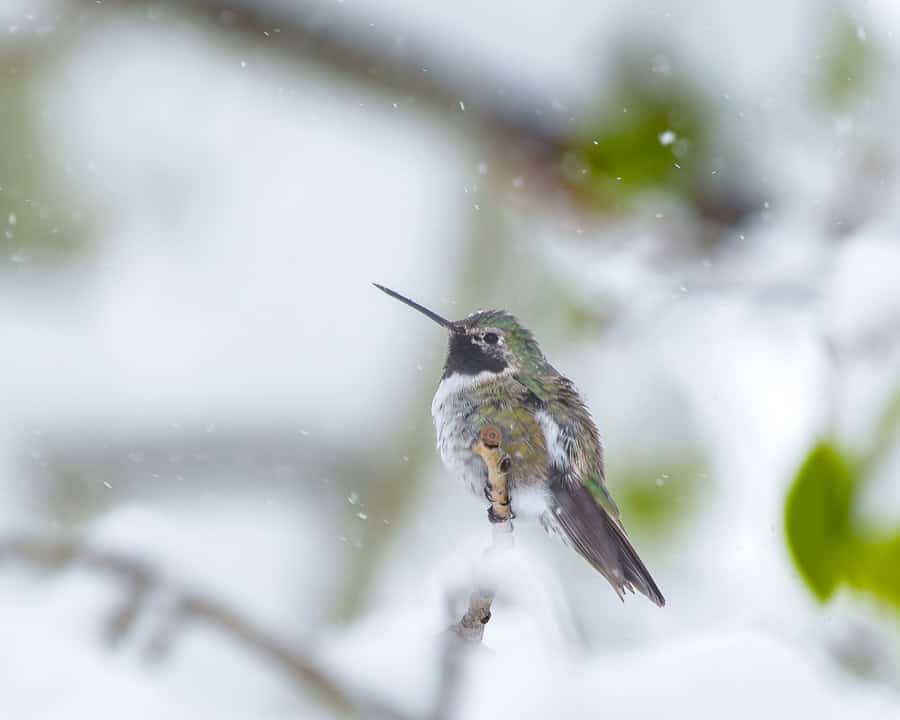
Chickadees are not migratory birds, and we enjoy them year-round. That said, I have always felt like they tend to shift their territories when the traveling bird species arrive and thus seem less prevalent in the warmer months of the year. When I lived on “Hummingbird Hill” years ago, winters found a great plethora of chickadees and other birds foraging the yard. Once the hummingbirds arrived in larger numbers they tended to take over (being the quite bullies I wrote about earlier this summer).
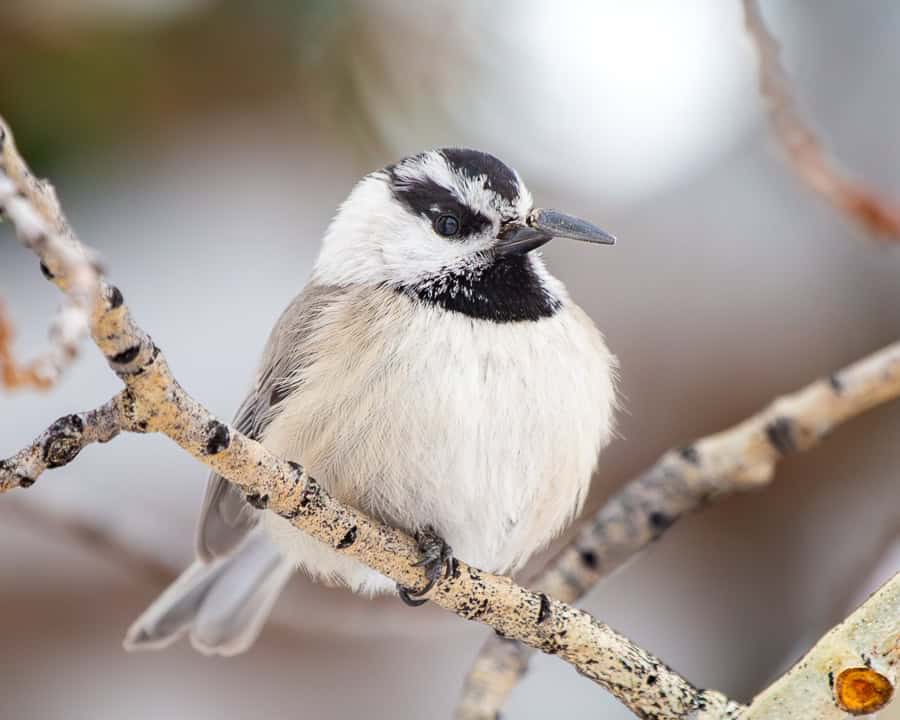
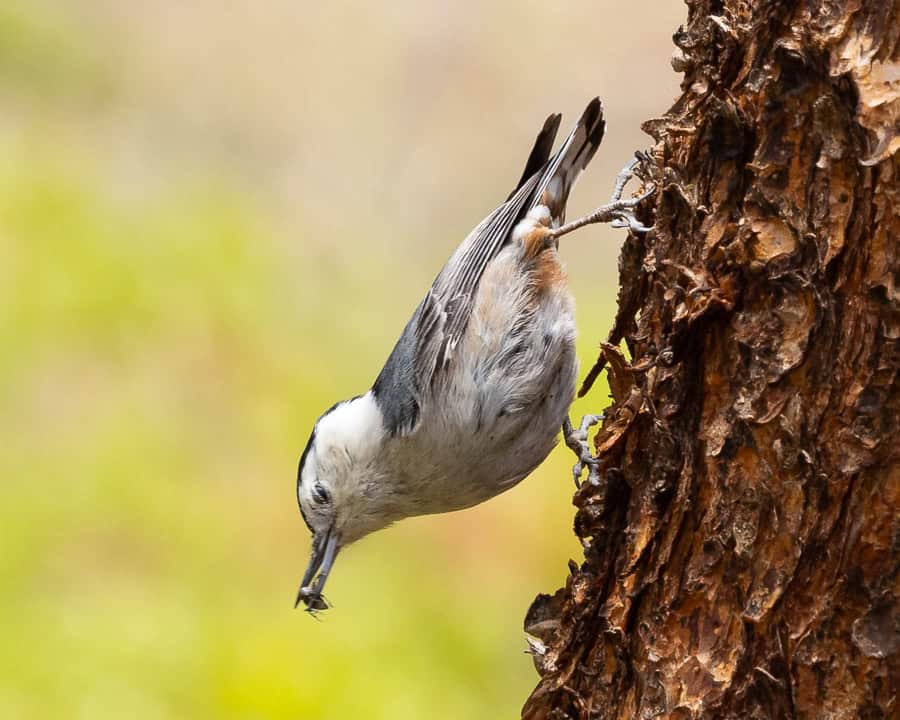
Winter living for any animal can be quite harsh here in the mountains, but these little ones persevere quite hardily. They typically spend their foraging in mixed flocks, often joining Juncos and Nuthatches for better protection from predation. The chickadees are generally found performing “guard duty” as they tend to keep to the outer branches of trees while the nuthatches scurry about the trunks and the juncos often keep to the ground. The familiar namesake call is the bird’s alarm and will vocalize more “Dee Dee Dee’s” in their song if a perceived threat is near.
While chickadees frequent feeders, only a small portion of their diet comes from our hand-outs. Much of their food consists of insects, spiders and even carrion. We have them to thank for putting in diligent work trying to control our pine beetles. During outbreaks, they are quite happy fattening up on the caterpillars that will later turn into the infamously destructive invaders. When an outbreak of lodgepole needle miners took place in Arizona, one bird alone was found to have 275 caterpillars in its stomach!
Not only do the birds eat while they forage, but these cunning creatures are also quite adept at stashing food for later eating. At a feeder, the birds will crack open the hull to pick out the seed then flit off with their tasty morsel to a hiding spot to be buried until a later date. Stashing behavior is not uncommon for many animals, but the process chickadees utilize in finding the food later is quite astonishing. Studies have shown that they can locate a stash within a centimeter’s distance of accuracy.
One group of scientists performed a ground-breaking experiment placing extremely lightweight headgear on the birds to study brain activity as they foraged. When I initially came across this bit of information, I must admit I imagined a flock of little chickadees hopping about the forest floor all looking like Doc Brown in Back to the Future donning ridiculous little helmets with wires and electrodes protruding willy-nilly from their heads.
Brain impulses detected by the headgear showed that when a seed was stashed, the birds created a sort of mental “barcode” of the exact spatial location in a specific small set of neurons of the hippocampus, the brain’s memory center. When the birds returned to eat their stash, a similar wave of brain activity was seen in those same neurons. When different seeds were found, it was noted that different sets of neurons fired the “memory” of that specific seed site. This signified a completely different barcode being triggered, even if the stashes were in the same immediate area.
This astounding discovery showed that the birds were not only showing an incredible memory capacity in general but were also able to spatially separate the memories into individual packets of information. This brought about the neural barcode concept.
Using the retail barcodes metaphor, they are unique for not just a type of product, but also an individual iteration of said product. They store vast amounts of information from price to item details to actual location in the store. Without a barcode, finding a specific item would be akin to searching an aisle of a grocery store when all the brand options had no labels.
This neural barcode created by the chickadees packs all of the data in one miniscule packet of memory data, separate from every other stashed seed memory. Quite a shocking and amazing discovery! It is assumed that other food-stashing birds may well have similar neural abilities, but this has not yet been proven. It is further possible that mammals also take advantage of a similar neural process, but it would be difficult to detect if one didn’t know exactly when and where to look for it.
Either way, this is yet another stunning example of not only how much we are learning but also have yet to learn from our natural world and the life that we share space with on our grand planet home.
Sources:
https://www.allaboutbirds.org/guide/Mountain_Chickadee/overview
https://www.scientificamerican.com/article/chickadees-use-brain-cell-barcodes-to-remember-where-they-stashed-their/
Originally published in The Mountain-Ear