Raggedy Moose and Their Winter Ticks
Emerging from winter is often symbolized by a scruffy and unkempt look due to being pent up in the cabin for months. So too does our wildlife carry a similar raggedy look as they transition from winter to summer coats. One species that tends to gain the most attention is our moose, sometimes seen with alarmingly whitened and patchy fur.
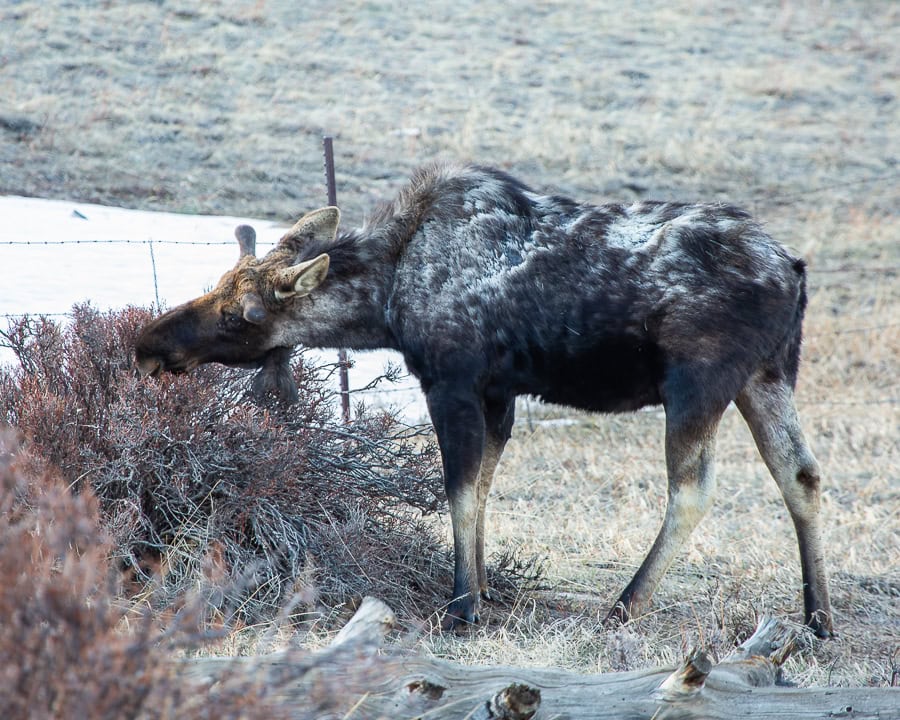
No, this is not a normal stage of their shed, nor is it mange or disease. It is also not a cause for a call to CPW to come check on the health and well-being of the animal. It is the result of a long winter of dealing with a nasty parasite known as the winter tick.
While these ticks can affect several different species of critters, moose tend to be the most common host. This is likely due to their size and ability to maintain a food source for the entire winter.
Many different types of ticks tend to utilize multiple hosts for each stage of their life cycle. Winter ticks differ in that they remain on the same host animal for their entire feeding existence.
Eggs begin hatching in the late summer and early fall, with larvae climbing vegetation in search of a passing host. Once found, they will transition throughout winter to their nymph (mid-life) stage, and then into adulthood. By early spring they maximize their feeding just before dropping off. They will then return to the leaf litter and pine duff to lay their eggs for the next fall before dieing.
Infestations can number into the tens of thousands on a single moose. As we know well, a tick’s food is blood. The older they get, the more they consume, which can be extremely detrimental to the life of the moose.
Massive blood loss is commonly followed by malnutrition and weight loss. At the same time the ticks are feeding the most in the late winter to prepare for egg laying, the moose’s forage has its lowest nutritional value. This adds a much more difficult hurdle to recovery and can often spell the demise of younger animals.
Once the body runs out of fat stores, it turns to muscle mass for sustenance. Calves with larger infestations can lose up to 30% of their body weight, and by spring can reach mortality levels of loss. Adults tend to fare better, with greater weight and muscle mass from which the ticks and body can feed on.
Another mortality factor is due to the incessant itchiness of it all. The irritation of the ticks causes the moose to scratch, sometimes incessantly. This begins the process of hair loss, which can prove fatal in the winter. By spring, the loss is such that they can rub down to bare skin, and white fur is the resulting broken and dead underlayer laid bare from endless scratching.
Thankfully, most adults seen at this stage will recover. The ticks will soon fall off and they will finally be able to begin their recovery, usually returning to normal health. By early summer they are showing off their shiny new summer coat.
Here in Colorado, infestations are common, but thankfully nowhere near as detrimental to the overall population. In New England, the infestations have caused mortality rates in calves to reach levels as high as 70-90%, decimating their numbers. The sight of these white, semi-hairless and greatly emaciated creatures has born the name “Ghost Moose”.
If you see them here, have heart knowing they will likely be just fine and survive without much issue. It is also comforting to know that these ticks do not carry disease, and they do not affect humans (or our pets) in any way. Know that we can all safely share space (from a safe distance, of course) and show off our raggedy spring selves in all its glory!
Originally published in The Mountain-Ear
Source:
https://www.wildlife.nh.gov/sites/g/files/ehbemt746/files/documents/winter-ticks.pdf