A look at our smaller, less notorious of the feline neighbors, the Bobcat
Big cats tend to take the spotlight when it comes to talking of our local feline neighbors (for good reasons due to their sometimes-nefarious behavior). This week I wanted to look at the smaller (and generally less problematic) cousin, the bobcat.
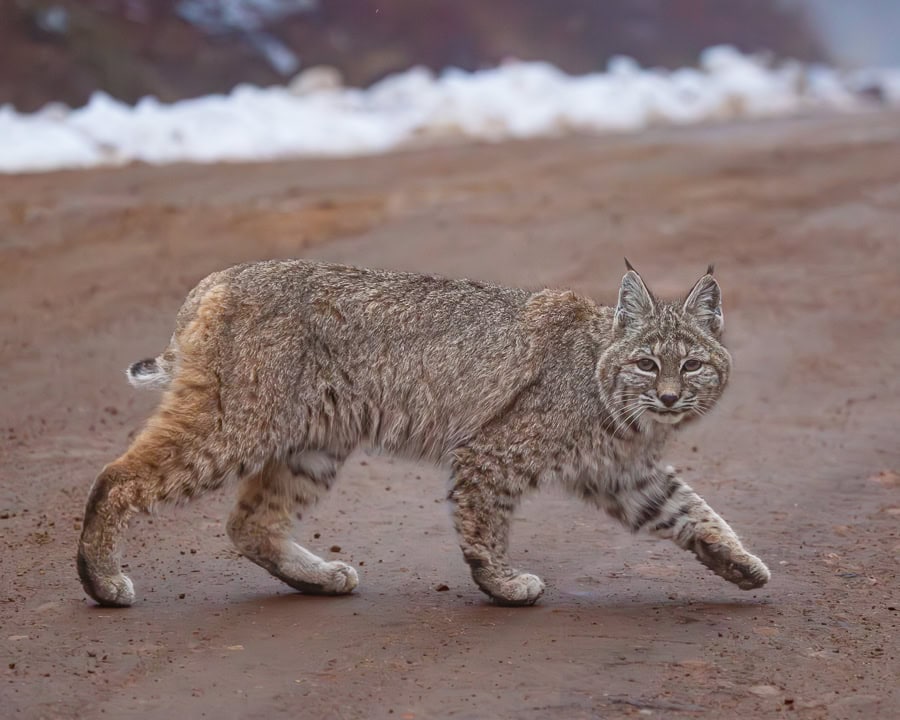
Bobcats are quite common throughout the Peak-to-Peak region and greater front range, but like their larger relatives, they prefer a life of human avoidance. That said, they are statistically more common to see than mountain lions, and in my experience, tend to be more aloof as opposed to embracing the strict human avoidance lions tend to display.
I’ve always equated their behavior towards us to that of a house cat. It’s not so much that they detest us and avoid us at all costs, as much as having an attitude of us being a nuisance to be ignored as much as possible. You are in their house, no matter what you may think of them lounging in a sunny spot on your deck or driveway.
They can range from 8-30 lbs, so not a large animal to contend with if encountered. They are also typically not a threat to humans (but will fight if cornered or they feel trapped). While there are accounts, they are also typically not a large threat to our pets. They can and may take down a cat, or less likely, a dog, but their preferred meal is rabbit, with rodents and birds being a close second place. On rare occasions they have also been known to take down small deer.
Bobcats have established territories in a wide variety of ecosystems throughout North America and can be found in all contiguous states in the U.S. aside from Delaware (I’m sure there is a good story on their part behind the why of that interesting tidbit…). Preferring to avoid deep snow, Alaska is not to their liking, and apparently none have ever stowed away on a boat to Hawaii.
Sightings of these elusive neighbors often lead to a common discussion, was it a bobcat or a lynx. Know that the lynx is typically not found anywhere on the front range. They tend to prefer life above 10k’, mainly sticking to the central mountains and the San Juans where re-introduction programs have proved quite successful. That said, the entire state population of lynx is estimated to only be around 70-100, where bobcats are assumed to have numbers between 10-20k, narrowing the odds of a sighting being a lynx even further.
If you happen to be traveling in the state and see one of the two, there are a few tells that give away which kitty is which. The easiest to spot (mainly because they may well be making their way away from you) is the tail. Both are stunted (as opposed to the longer tail of most cats), but the lynx tail is all black, and the bobcat tail is only black on the top, and white on the bottom, often with black stripes as well.
Further, lynx paws are dramatically larger, a requirement for navigating those deep mountain snows. Bobcat paws are more proportional to their body size, like a housecat. Head hair is also a tell, with lynx having slightly longer and prominent ear tufts, and much more defined sideburns. Think Martin Van Buren as our lynx vs a bit more distinguished John Quincy Adams as the bobcat (for those missing the historic reference, just know that MVB embraced quite the “Wow” factor in his facial coiffure).
If either cat (or any big cat) is spotted, you are entitled to feel quite lucky in your encounter. You can certainly attempt the human luring technique utilized in this article’s title; however, you should expect the same smug indifference you might see from your housecat or the bob version in the image accompanying the article. They could likely care less…
Originally published in The Mountain-Ear
Sources:
https://cpw.state.co.us/species/bobcat
https://www.boulderaudubon.org/articles/boulder-bobcats
https://cpw.state.co.us/species/lynx