A close inspection of prairie hunters, the Ferruginous Hawk
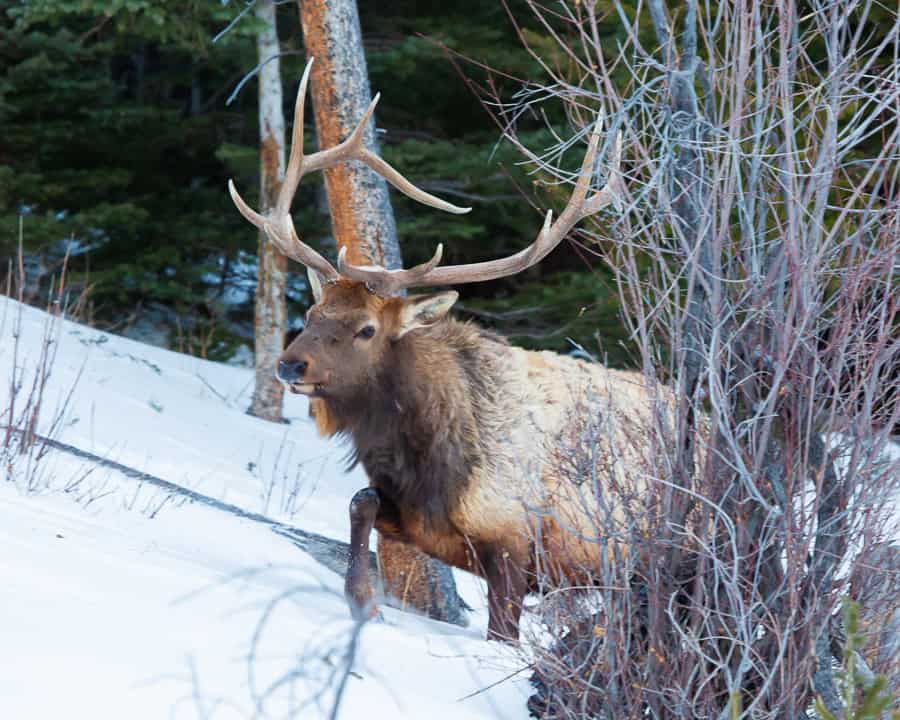
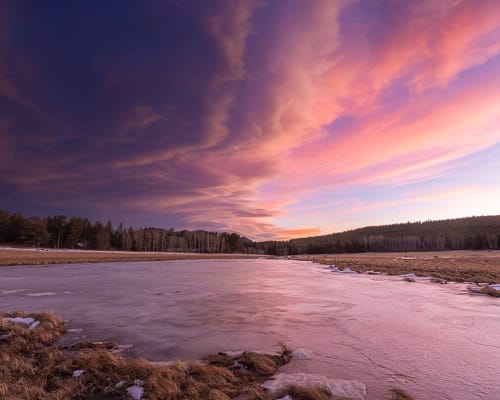
While we haven’t really felt it much outside of the “W”, winter has arrived here in the foothills. Typically, summer and fall find me spending much of my photography time in the high country with the larger of our 4-legged’s. As the seasons shift, so do my own migration patterns, and I head eastward in search of life on the wing.
Living in an area that sees such a long winter, common sense might allude to the notion that migrations move wildlife away to warmer climes. When it comes to my specific winter quarry, the raptors, this is not always the case. While we bid farewell to our Osprey, Swainson’s Hawks and others in autumn, winter sees the arrival of more bald eagles escaping harsher winters in the north, as well as the subject of this week’s article, the beautiful Ferruginous Hawks.
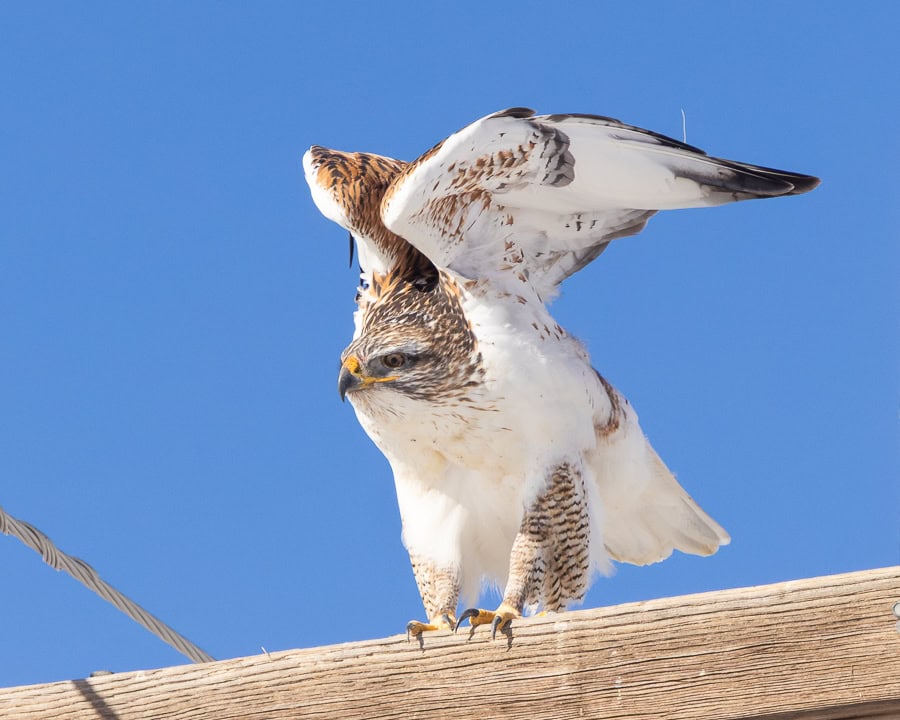
Ferruginous hawks are the largest hawk found in North America. They come in at an average length of 24 inches with a wingspan of nearly 5 feet. By comparison, Red Tailed hawks, the next closest in size and most common in North America, average about 18 inches in length with a wingspan of about 4 feet.
If one is attempting to identify them, the most striking differences from their red tailed cousins outside of size are coloration, leg feathers and cere (the fleshy area at the base of a bird’s beak) colors. These beauties have a mottled brown top of their body, with a strikingly white underbody with few markings other than mottled brown on their legs and under the wings. As to their leg feathers, they are the only hawk in North America other than Rough Legged’s to “wear pants”. That is to say, their leg feathers reach all the way to their talons. As to the cere, it is a brilliant yellow, similar to that of a Golden Eagle.
I mention coloring, but it should be noted that like many species of hawks, they tend to display a light and dark morph. The darker morph ferruginous are just that, having a significantly darker full body coloring, and only white on the outer half of their wing bottoms. Morphing occurs as an adaptation in the way of confusing prey. While an animal might become accustomed to seeing a certain shape and color combination that identifies their predator, morphing allows the predator to better camouflage its presence. This can certainly make identification a bit trickier for both the prey as well as human observers.
Ferrugs (as they are commonly called) prefer life on the prairie. While Colorado is home to nesting pairs that live here year-round in the easternmost regions of the state, most tend to head north for the summer. Like most hawks, their preferred diet is rodents along with snakes and occasionally smaller reptiles. While they can take on something as large as a jackrabbit, much of their diet consists of ground squirrels and prairie dogs.
While these hawks do hunt from the air like most raptors, they also have been observed hunting on the ground. Having found an active den, they will sometimes simply land and stand near an entrance out of sight from the inside and wait for their quarry to emerge. Even more unique in their ground-hunting tactics, they have been known to gather in groups of 5-10 birds at a prairie dog colony. A taken prey tends to cause a competitive feeding frenzy, with the birds hopping around and flapping their wings to display dominance. This can sometimes attract more hawks, and occasionally even Golden and Bald Eagles, to the fracas.
This co-habitation with other hawks is also common in their roosting habits. Unlike many raptors who tend to stay solitary or in pairs, ferrugs sometimes gather in flocks of as many as 100 hawks and have even been known to include Golden Eagles as well.
If you happen to find yourself making your way about the pasture-land and plains east of the mountains, keep your eyes peeled for these striking birds. Like most other prairie raptors, their hunting from elevated positions tends to have them spotted on telephone poles and high-tension power line towers due to the scarcity of trees. Their bright white bellies (if not a dark morph) will be an easy giveaway to enjoying the company of this grandly large and majestic hawk!
Sources:
https://www.allaboutbirds.org/guide/Ferruginous_Hawk/overview
https://ornithology.com/avian-color-morphs/
Originally published in The Mountain-Ear