While the common stereotypical “picture” of bull elk tends to focus on the rut season and their battles and seeming adversity towards one another, much of the life of these stunning creatures is spent in juxtaposition of this behavior as they typically live in a well bonded brotherhood of family lines and herd relations. Throughout much of the year, most bulls tend to gather in their own small numbers known as Bachelor Herds, which can number anywhere from a handful of alphas up to groupings of over 15-20 or more of varying ages.
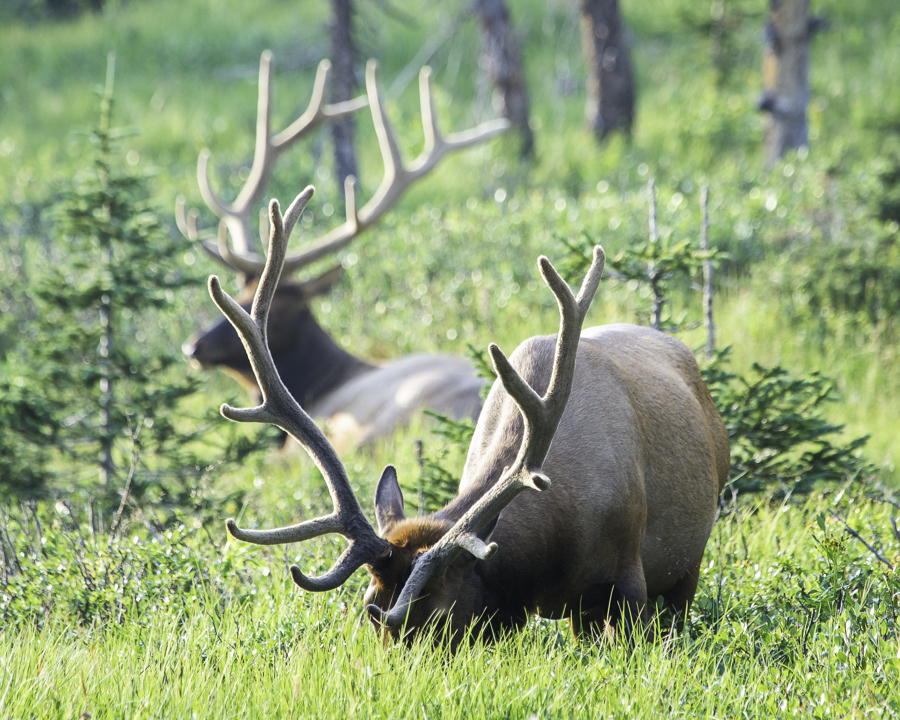
Similar to the much larger herds of cows and young, these groups provide strength in numbers in terms of protection against predation, and also aid in honing the skills necessary for overall herd strength and survival. While the early life of young spike bulls is spent among the larger herds of cows learning the basics of life and survival, coming of age and “moving in” with the bachelor herds is a major step into the lessons of adulthood, bonding, hierarchy and general strength and survival of the herd as a whole.
While sparring practice tends to take up a bit of time throughout the year when not grazing, this bit of bull life takes a break in the late spring and summer months, giving the antlers ample time to grow adequately and without harm. As I have written before, the antler velvet provides necessary blood flow for growth as well as controlling body temperatures with said blood flow and damaging the velvet with sparring can have some undesired consequences in the way of what is known as Non-Typical (irregular and sometimes quite deformed) antler growth which can greatly affect their success (or lack thereof) during the rut.
There is a sense of peaceful comradery among the bulls, taking their summer days in a casual stride as they graze and care for each other. Keeping careful watch of one another and for possible threats takes much of their time when not eating, and as with any herd, they tend to take turns, rotating “shifts” of who eats, beds down, and takes watch. While life lessons are always being passed down to the younger generations, the lessons of summer tend to focus on the more subtle aspects of herd life as opposed to the more physically challenging training for individual “status” required during the rut, as well as the crucial survival skills necessary to weather the harsh winters that follow.
With the approach of mid-August, we are nearly to the end of this season of tranquility. It won’t be long before the “gloves come off” (the antler velvet is shed) and another rut begins in earnest, with all of the excitement and bravado that the famous mating season brings. This “down-time” of energy building and conservation is absolutely crucial to their survival in what will be the most challenging months of life in the wild for these majestic creatures.
Originally published in The Mountain-Ear