A few fun facts about our Northern Flickers
Colorado is home to a few different woodpeckers, the most frequently encountered being the downy and hairy species. We also enjoy another that for all its classifications as a woodpecker, doesn’t really spend a lot of its time pecking, at least not for food. This fancy non-conformist is the Northern Flicker.
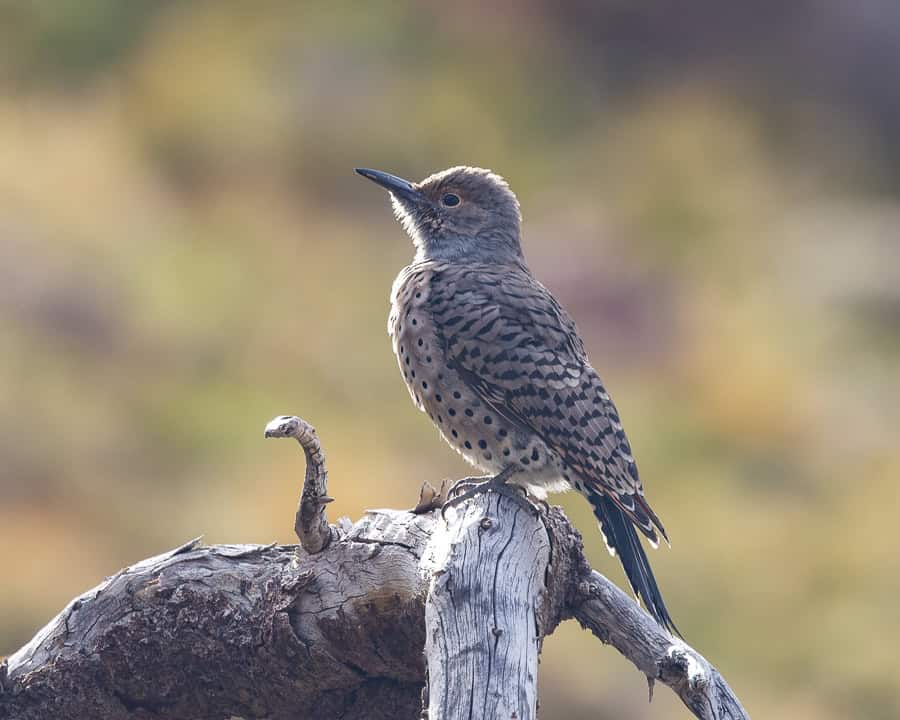
Flickers differ from our other woodpeckers in several ways. As mentioned above, these birds are not commonly seen banging away on trees in search of bugs. In fact, they prefer to hunt for their prey on the ground, using their strong bill to dig rather than chip away at a tree trunk or branch. That said, the name dirtpecker is far less flattering…
The only actual tree-pecking that happens is typically to communicate with other woodpeckers. This is usually done to denote territory or to attract a mate. Since this pecking is for long-distance talking, around humans they will also forego a tree in lieu of an object that can produce a louder sound. This often equates to metal siding on a house, metal wire casings on the sides of telephone poles, and any other resonation amplifier (much to the chagrin of a late sleeper).
They also differ from our other Colorado species in that they do tend to migrate. Some simply head to lower elevations, where others may travel greater distances to their winter homes. Any snow cover for lengths of time diminishes hunting prospects, necessitating the move.
A recent outing found me enjoying the surprise company of about a half a dozen who have taken summer residency high on the alpine tundra. While I’ve ran into plenty in our montane forests around town, I’d not known that some headed so high.
Once the snow arrives, they will head to lower climes, but until then, I’d imagine their summer hunting grounds are quite abundant with prey. They make their home in the stunted and twisted trunks and knotholes of the Krumholtz pines, and spend their days plying the vast, rocky grasslands of the tundra for bugs.
Spending so much time on the ground, the flicker diet consists largely of ants. In fact, it is theorized that no other bird consumes more ants in all of North America. Anatomical studies have found upwards off 5000 ants in a stomach, consumed in a single day.
Along with being a food source, the birds enjoy another use for the ants in the way of preening assistance. The technique is called Anting and is performed by spreading their wings over an active mound, allowing the bugs to crawl into their feathers. The insects secrete formic acid, which kills parasites. They sometimes take a grim turn in the act by way of crushing the ants and working them into their feathers as they preen.
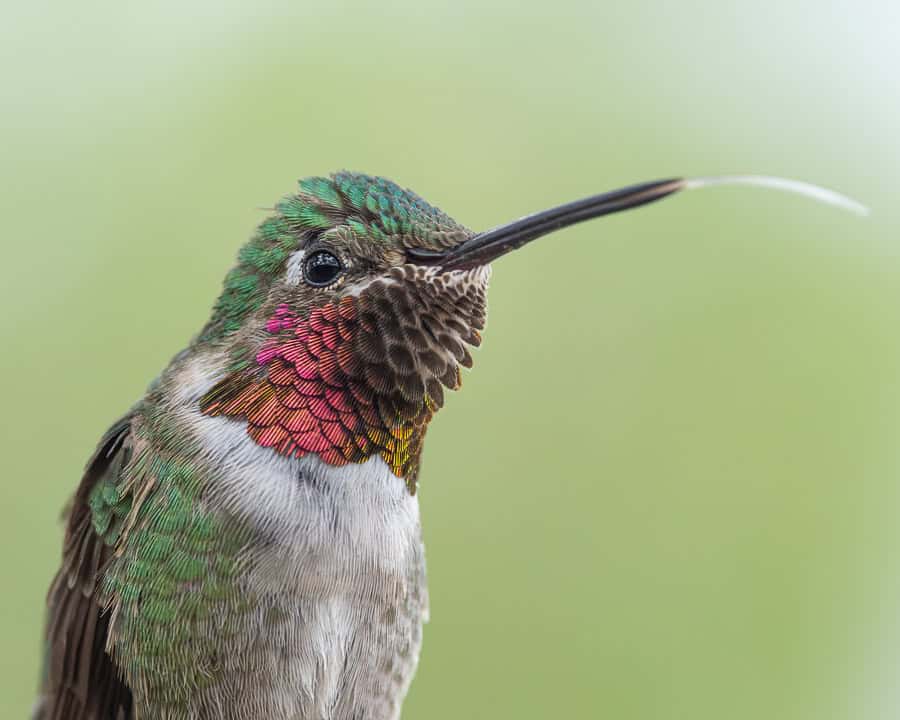
It is thought that flickers have some of the longest tongues of any bird, reaching over 2 inches out from the tips of their bills. This is likely helpful in reaching those hard-to-get-to spots on the body with a sticky tongue covered in masticated ant and formic acid.
Flickers also have quite a unique call compared to other woodpeckers and are very distinct when heard among other types of Colorado birds. In my early days here in the mountains, the resounding ki-ki-ki-ki-ki-ki call made me think there might be a pet tropical bird that got loose. It does makes sense, as flickers do live as far south as Guatemala.
Whether high on a mountain top, or simply out in your own backyard, keep an eye out in the trees (and on the ground) for these unique neighbors. If you don’t see them, you’ll hear the call, possibly slightly muffled with a mouth full of ants, and be comforted knowing it is not some stray parrot about to freeze its tail-feathers off with the oncoming winter.
Sources:
https://www.audubon.org/field-guide/bird/northern-flicker
https://www.inaturalist.org/posts/107123-fun-facts-about-the-northern-flicker
https://www.allaboutbirds.org/guide/Northern_Flicker/overview
Originally published in The Mountain-Ear