A new look at the relationship between bees and flowers
Understanding the world we live in is a never-ending process. As soon as we learn something new in any field, it opens doors to questions and possible answers in fields we often assume are completely unconnected. That said, it only goes to prove just how intricately connected and amazing life and existence is on our little rock in space.
The study and understanding of electricity and electric fields has opened some pretty astounding doors that apply to the world’s most famous pollinators. The buzz about bees is not just about their iconic wing drone. We now know that they are electric!
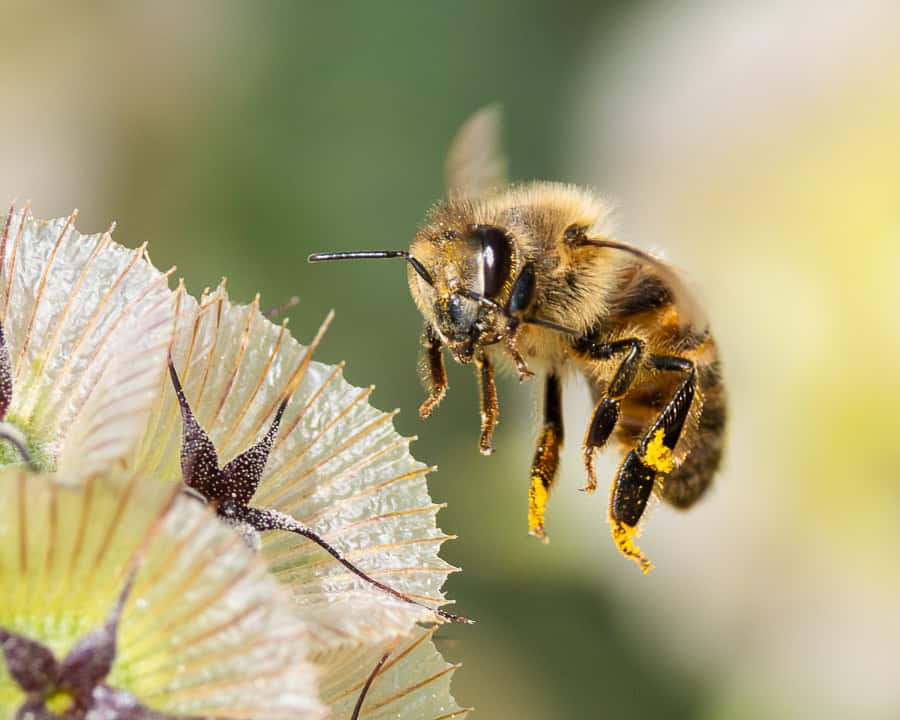
Built up by the beating of thousands of wings, it is understood that a swarm of honeybees carries the same charge as a thundercloud. It is also theorized that if you had access to about 50 million willing bees, you could jump-start a car battery (if you could get all of them on it at once)!
Bees need flowers and flowers need pollinators. While we have long understood this symbiotic relationship, we are just now beginning to dig deep into the how of it all. The connecting factor seems to be none other than this electric charge.
These charges are now understood to aid in pollen gathering and subsequently further pollination. While the bees carry a positive charge (with wing beats generating up to 200 volts!), plants typically carry a negative charge. Due to static properties, the positive charge allows pollen to adhere to the bee simply by way of static cling.
It is now also theorized that these charges allow for a sort of “communication” between the insects and the plants. We know that sharks can detect electric fields, but as mentioned above, doors are now opening to the idea that other creatures, bees included, can do the same.
A study was conducted by a team of scientists in Bristol, England where a space was filled with fake flowers. Half of the “flowers” were filled with sugary water and electrically charged, while the other half were filled with a bitter (to bees) quinine solution. The bees learned to go directly to the sugary, charged flowers and avoid the bitter solution, but interestingly, when the charge was turned off, the bees showed no preferences, suggesting that they were attracted to the charge as opposed to the substance.
While we’re not sure just how bees sense the charge, we do know that electric exchange takes place between the positively charged bees and the negatively charged flowers. This exchange also carries over to the vacancy of nectar after a bee leaves the plant. The lack of charge in the plant deters other bees from trying to feed.
One study went further and found that petunia stems not only become more charged when a bee is near, but they also increase scent production. This sets up the theory that the plant not only senses the charged presence of a bee but can also send an electric signal to the bees without any contact at all. Further, we’re finding that plants utilize the electric fields to communicate with each other, but that opens doors to a whole different article.
Suffice it to say, this newly opened field of understanding the connectivity and relationships of life on our planet presents some astounding revelations. It makes you wonder if we can tap into a sensitivity of these fields ourselves. For now, we can simply sit back and enjoy the buzz and be shocked by what we learn from these tiny spreaders of life as we know it.
Sources:
https://www.scientificamerican.com/podcast/episode/new-research-shows-bees-buzz-in-more-ways-than-you-might-think/
https://www.sciencenews.org/article/flower-antennas-bees-electrical-signals
https://www.esalq.usp.br/lepse/imgs/conteudo_thumb/Plants-talk-to-bees-with-electricity–say-scientists.pdf
Originally published in The Mountain-Ear