A look at our state animal, the Bighorn Sheep
Perhaps you’ve spotted them high on the hillside above I-70, or navigating the steep canyon walls of hwy 34 in the Big Thompson Canyon. Bighorn sheep are the most iconic animals to call this rugged state home, and it’s no wonder they were chosen as Colorado’s state animal.
There are 2 species of bighorns in Colorado, the Rocky Mountain and the Desert sheep. The Rocky Mountain variant is far more prolific, with an estimated 7,500 throughout the state. Desert bighorn numbers are estimated at about 500 and are only found in the far western regions of the state.
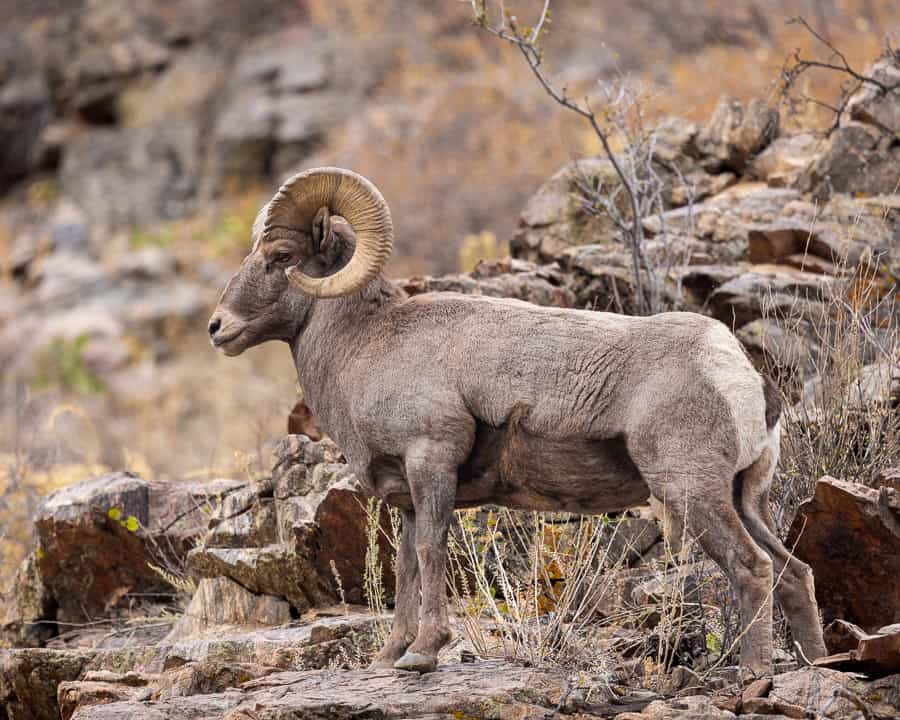
These creatures are best known for 2 reasons, amazing agility in making their way through the treacherous terrain of steep canyon walls, and the famous ritual of the bashing of heads performed by the rams (males). The head-butting sometimes even takes place with death-defying power on those same sheer, rocky faces.
Bighorn hooves are well adapted to navigating the oft precipitous crags. A toenail-like outer hoof is shaped to be able to make purchases on the narrowest ledges. The inner hoof is a soft pad with a gripping surface that conforms to a variety of rocky surfaces.
While not all their time is spent on the steepest walls of canyons, these hoof features provide the means for incredibly agile feats of navigation, with the terrain providing excellent protection from predators. They can easily traverse ledges as narrow as 2 inches.
Being a ruminant animal, bighorns have 4 stomachs. This array allows them to graze and store large amounts of food in terrain that could be dangerous with predators. They then move to the higher, safer cliffs to “regurgitate” and chew the cud for better digestion. The sheep also have a unique ability to absorb moisture from their food, allowing them to go much longer without drinking water when retreating to their high, safe zones.
As the title mentions, while well known for their astounding agility, they are also fragile creatures, proven to be quite susceptible to illness and disease. The leading cause of natural death is pneumonia, with predation coming in second.
European settlers and their livestock (mainly domestic sheep) brought the bacteria Mycoplasma ovipneumoniae (which causes the pneumonia) with them, and the North American bighorn population has never been the same. Once thought to number between 1.5-2 million animals, modern estimates put the entire North American population at around 70-80,000.
Not only can an outbreak have high mortality rates, but some sheep also carry and chronically shed the bacteria annually. Shedding most often affects newborns, and if left untreated (usually by identifying and removing an infected animal), can eventually lead to the decimation of an entire herd over the course of a few years.
Here in Colorado many herds have undergone significant losses just in the last 100 years. The method of herd recovery most used is to relocate and introduce sheep from larger, healthier herds. Identifying outbreaks and removing infected animals is a great help, and if sick (coughing), or dead sheep are encountered, CPW requests immediate notification of locations.
While sometimes difficult to find due to their chosen high and craggy homes, if you have the opportunity, I highly recommend spending time seeking out our bighorns. In the fall the famous head-butting takes place more often than the rest of the year as they get close to their rut season and is a stunning ritual to behold. We just ask that you leave your domestic livestock at home when you pay them a visit.
Sources:
https://www.nwf.org/Educational-Resources/Wildlife-Guide/Mammals/Bighorn-Sheep
https://www.nps.gov/romo/learn/nature/bighorn_sheep.htm
https://www.ndow.org/blog/diseases-of-bighorn-sheep/
Originally published in The Mountain-Ear