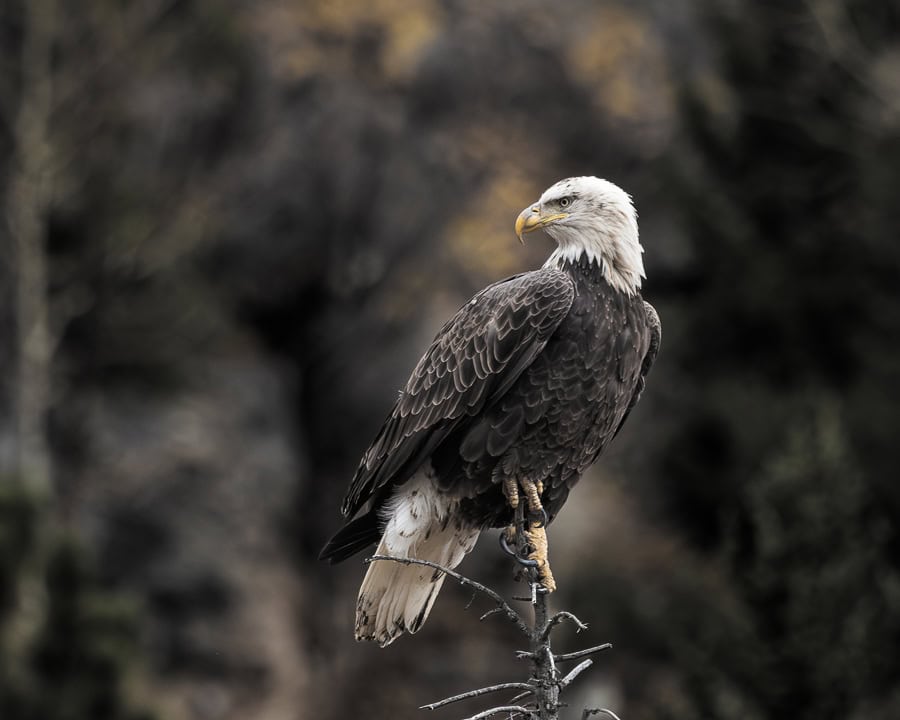
A look beyond the patriotic trappings of our national bird, the Bald Eagle
Symbol of a nation, revered by native cultures, a recent encounter inspired me to devote this week’s article to a majestic yet sometimes misunderstood raptor, the bald eagle.
Bald eagles as we know well, aren’t in fact bald. Their name is derived from the Old English word Balde, which means white head. In fact, their scientific name Haliaeetus leucocephalus translates to White Headed Sea Eagle. This name too is a stretch, as living here in Colorado, a land-locked state, proves otherwise.
Existing only in North America, they can be found from Alaska and northern Canada down to Mexico, and in every U.S. state except for Hawaii.
In 1782, the Second Continental Congress adopted the bald eagle as our national symbol. They can be found adorning everything from the Great Seal of the United States to currency, passports, military emblems, and of course, an overwhelming plethora of patriotic regalia. Interestingly, it took nearly 250 years to finally be enshrined as the national bird, which happened on December 24th 2024.
The birds are well known for mating for life, or at least until a partner’s demise. A pair will attempt to reproduce just once a year. Offspring will fledge anywhere from 10-14 weeks after hatching and usually lose the parental bond after an average 6 months.
Once the young are on their own, they will spend the next 4-5 years living a nomadic life. This phase of life will see them exploring hundreds if not thousands of miles around the continent before settling down and establishing their own territory.
As with many raptors, if an adult pair is being observed, the females are typically larger than the males (up to 25% with bald eagles). Yearlings often appear larger than either adult. This size difference is due to the feathers (specifically on the tail and wings) being longer. As the young not adept at flight, larger feathers provide better lift and greater loft for gliding.
Young bald eagles are also often mistaken as golden eagles. They start out with a very dark coat growing out of their down and spend their first few years with mostly brown and mottled plumage and darker bill. It is typically not until their 4th or 5th year that they fully gain the distinctive dark body, white head and brilliant yellow bill.
For all of the majestic and patriotic trappings, their actual behavior often belies majesty. Bald eagles are very much opportunists, opting to steal or scavenge a meal rather than hunt. They commonly bully and steal from the far superior anglers, osprey. They’ve even been known to take from mammals, including humans.
A few winters ago, I was observing an eagle on a perch overlooking a few ponds populated by ice fishermen. After one low swoop by the bird, I was remarking my awe to one of the fishermen. He stated that the eagle had been there all day attempting to steal their catches.
Ask someone from Alaska and you’ll likely hear complaints, and that they are considered more a pest than a majestic sight. Alaska is home to an estimated half of the United States total bald eagle population. They are known to raid dumpsters and trash cans, steal from fishermen, and have even been observed snatching food items from the grocery bags of unsuspecting humans.
None of this nefarious behavior, however, takes away from the stunning beauty and majesty when catching a glimpse of a bald eagle in the wild. Removed from the temptations provided by humans, there are few other animals in the North America that exude such a strong sense of awe and wonder.
Sources:
https://www.audubon.org/magazine/10-fun-facts-about-bald-eagle
https://www.nationalgeographic.com/magazine/article/explore-bird-bald-eagle-dirty
Originally published in The Mountain-Ear