There is nothing quite like taking in a relaxing evening along the shores of our very own little treasure that is Mud Lake. Long time followers of my photography know well that it has long been a favorite of mine to practice my sunset and reflection images. There is a gentle sense of peace just sitting at the waters edge listening to the chorale of frogs accompanied by the occasional call of red winged blackbirds and distant splash of a muskrat attempting to avoid being seen with a ruckus. Gazing out over the golden and azure reflections of the end of the day, ripples of the passing of one of our more unassuming neighbors, the pied-billed grebe, helps to add motion and life to the symphonic painting of nature.
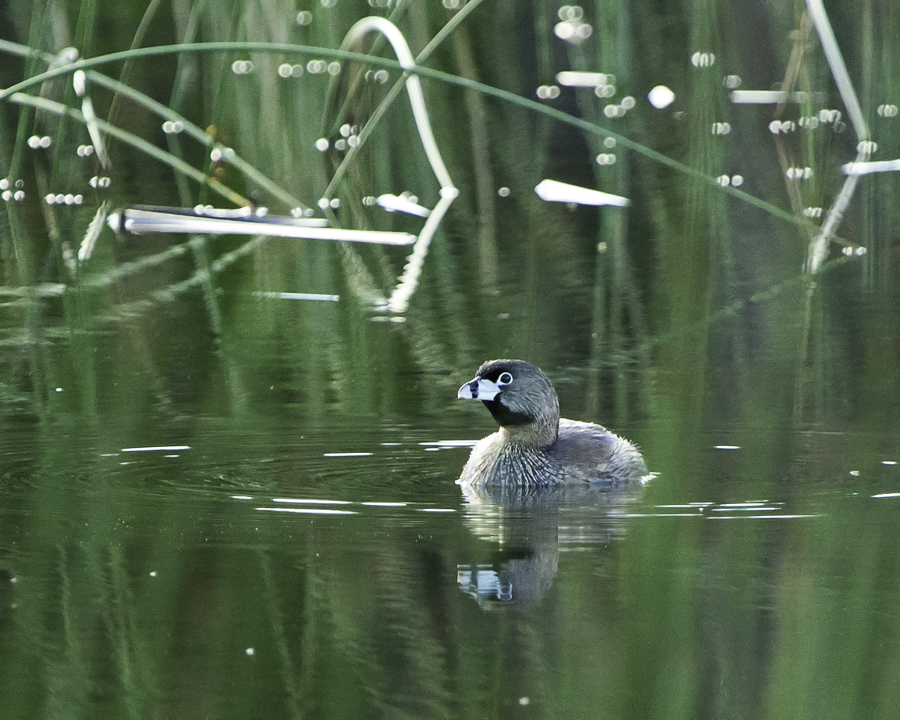
I say unassuming as these little creatures tend to go relatively unnoticed as they go about their lives, both literally and figuratively. In my experiences at the lake, their presence as a waterfowl is usually “overpowered” by the larger mallard ducks, not only in size and color, but also in voice, as they make a very small peep as opposed to the boisterous quack of the larger species. Keeping to the tall reeds allows them to stay unnoticed, but they also have a unique “trick” that allows them to conceal much of their presence from the eyes on land or in the air. They enjoy a unique ability to trap water in their feathers, giving them great control over their buoyancy. This allows them to keep as much of their body under water as they wish, occasionally leaving just their heads poking out of the water giving visual protection as they hunt their favorite meals of water bugs and crustaceans such as crayfish.
Their diet, namely the crayfish, which if you’ve spent much time at Mud Lake know well their abundance, brings me to another interesting fact about the grebes. They are known to consume their own feathers as well as regurgitate them to their young. It was long unknown as to why they did this, but it is now theorized that the feathers, which can sometimes fill up to half of the bird’s stomach, are actually utilized as a filter to keep sharp bits of their crayfish shell from entering their intestines. These feathers and shell bits are then formed into a pellet that they later regurgitate like an owl.
The next time you happen to be out soaking up the meditative orchestra of nature and reflecting on the evening’s painting in the sky, keep a close eye and ear out for these elusive little critters. You may hear their tiny peep among the reeds as they communicate to a mate while hunting, or maybe catch a glimpse of what at first you may think is an errant mallard duckling plying the open waters, but upon closer inspection realize is just the little head of a pied-billed grebe keeping a low profile as it attempts to traverse the lake unnoticed by the bigger creatures.
Originally published in The Mountain-Ear