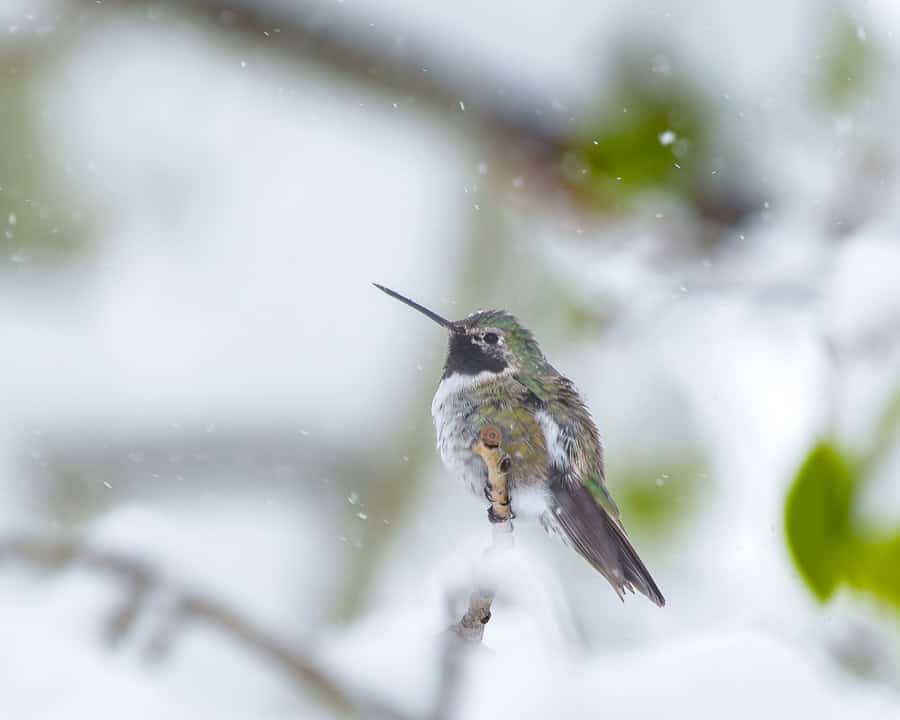
A deeper understanding of our amazing hummingbirds
I recently headed out one early morning to a very special place I was introduced to last year, a private hummingbird “sanctuary”. This land is near and dear to my heart after having formerly hosted as many as 1,000 birds a day myself. The trip and subsequent research for this article opened my eyes to a new understanding of these amazing birds, and they are not as delicately benign (fighting aside…) as they seem.
This year’s numbers have already begun to dwindle. The ongoing drought has diminished seasonal wildflower growth and lifespan. This reduction of a seemingly essential part of their diet is apparently giving them cause to pack up early now that breeding and fledging of young is winding down. Normally this sanctuary would likely have double the population I sat with, but there were still an estimated 1,000 or more birds buzzing about.
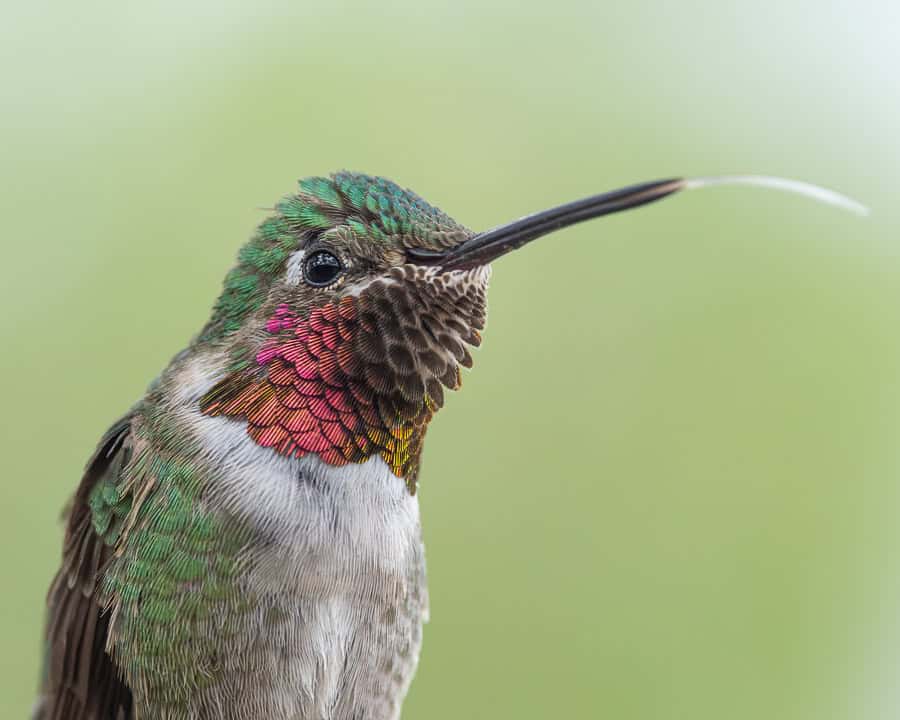
Hummingbirds here in Colorado typically spend equal time between the feeders, flowers and interestingly, bug catching. In fact, with many hummingbird species, arthropods make up the largest percentage of a bird’s diet. This roundly answers the oft asked question of what the birds feed on when they arrive in the spring, well before our wildflowers begin to appear.
While they are most known for their delicate feeding from flowers, hunting for insects has largely gone unnoticed and under-studied. As it turns out, they are incredibly adept predators. In fact, an article published by ornithologist Helmuth Wagner in 1948 featuring his study of hummingbirds in Mexico concluded that the species he observed were not dependent on flowers at all. Studies of stomach content in some birds showed as much as 79% consisted of digesting arthropods.
While we understand the adaptive development of the long bills for reaching nectar deep in flowers, it is now thought that this specialization has more depth (pun intended). A longer bill also allows the birds to hover near and catch insect prey without causing alert with their beating wings.
Evolutionary development goes even further! Some species have a lower bill that bends in the middle to better catch and consume insects in flight. What makes this more interesting is that they do so without any sort of joint to facilitate the bending. Previous studies showed some species with the ability to bend their upper bill, but new high-speed video captures show evidence of the lower bill bending as well. This allows for a larger opening with which to catch their prey.
Their hunting methods vary widely. Hover-gleaning is a method like flower feeding whereby they hover near a spider web or leaves and pluck insects with their tongues. In the case of spider webs, they will take both small spiders as well as insects already caught in the spider’s web.
A second method is known as Sally-hawking. This also involves hovering, but they do so within a swarm of insects, plucking them from the air much like a swallow.
Sally-gleaning is the third method. This often involves spying their prey from a relatively unobtrusive perch. Once spotted they fly to it and pick it off the surface (tree bark, leaves, etc.), returning to their perch to consume the prey.
It has been noted in North American species that females tend to forage for insects more than males. To that end, the females also typically have longer bills than males. In all hummingbird species, the females are the sole caretakers of young, requiring a much greater need for protein from insects for both themselves and their young.
Bugs aside, all food is helpful for their balanced diet. Putting out feeders is an oft-disputed subject in terms of ethics. While not in any way necessary, it is not harmful and is in fact helpful (bearing in mind one uses the “simple syrup” of 4:1 water to sugar ratio and not pre-made and dyed chemicals).
Feeding has obvious benefits during our spring snowstorms when both flowers and insects are scarce. Further, the caloric intake and subsequent “fattening up” is a great boon as they bulk up late in the summer in preparation for their long flight to their winter homes. Just remember to keep those feeders from their larger neighbors, the humming-bears…
Sources:
https://www.sciencenews.org/article/flex-bill-hummingbirds-surprising-insect-catching-style
https://www.allaboutbirds.org/news/not-all-sweetness-and-light-the-real-diet-of-hummingbirds/
Originally published in The Mountain-Ear