A couple weeks ago I wrote about our portly friends in the high country, the marmots, and after a recent first visit of the year to the alpine tundra with friends in town, I am inspired to write about their neighbors, the pika. These tiny creatures are truly a wonder, as they are one of the hardiest year-round residents on the mountain.
/image
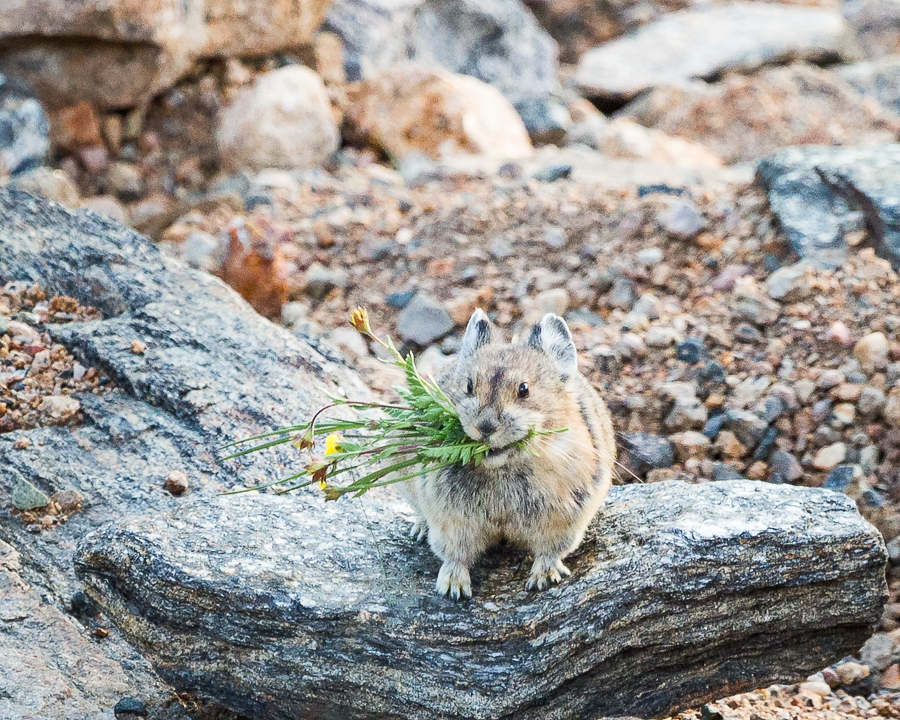
While they are a rodent between the size of a hamster and a small gerbil, they are closer related to rabbits than other species in the family. They are unique in that they live mostly above treeline, with a few exceptions if they find a place that is cool enough all year long. Not only do they live and thrive in one of the harshest environments on the planet, they also do not hibernate like their larger marmot neighbors. As opposed to storing up fat reserves, they spend their late spring through early fall storing up their food supply.
Like the marmot, they can often be heard before they are seen, as they live in colonies with almost always at least one or two perching atop a rock keeping watch for predators and giving a shrill cry in the event of possible approaching danger. Blending in quite well with their surroundings, I find it is easiest to use peripheral vision and look for movement, as they spend much of their day gathering their winter stores. You will find them dashing to and fro among the rocks foraging for grasses and tiny tundra flowers which they bring back to their dens to lay out in the sun to dry out to prevent molding. They interestingly also partake in a bit of thievery, as often they can be seen raiding a neighbor’s “stash” while it is out on another foraging run.
Being that they live in an area that tends to be cold for much of the year, they have a very thick coat of fur to provide warmth, including on the bottoms of their feet. This also sadly puts them in a precarious position, as they don’t shed to the degree that other mammals do, and absolutely require cooler temperatures to survive. This means that as we get deeper into climate change and rising average temperatures, these little ones here in Colorado have no place to go to survive if things heat up too much. They are already disappearing in a few places in the country and may well be the first creature in North America to face extinction solely due to climate change.
The next time you happen to be in the high country, keep your ears and eyes out, as it is quite likely you will enjoy a bit of demure entertainment as these little wonders make their way about their day, making hay!
Originally published in The Mountain-Ear